

A membrane is a barrier that prevents entry of materials. Membranes can be permeable, which allows certain materials to go in and out of the barrier based on a variety of factors.
Permeable Membrane in Biology
In biology, a simple example of a permeable membrane is a cell wall. In both plant and animal cells, the cell wall is a permeable membrane that allows the passage of particular substances while preventing others. This is known as semi-permeability.
Semi-permeability is found in plant and animal cells. The passage of substances is usually limited by: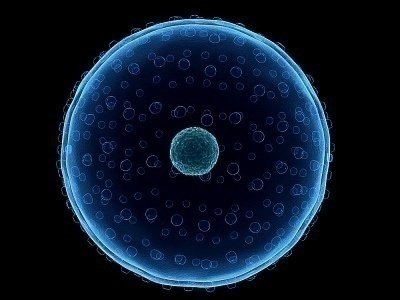
- Size – Particles that are too large for the openings in the membrane cannot enter certain cells. This helps to prevent cells from consuming other cells or materials that they cannot use. Although the membrane is designed to keep larger particles out, the cell membrane can be carefully controlled to accept larger substances.
- Charge – A substance’s charge or polarity can influence how the cellular wall absorbs it. Free ions are transferred between the membranes frequently as they are used for various organic functions. In addition, small particles of absorbent substances that are negatively charged will be attracted to the positively charged cellular structures.
- Solubility – The substance that is being absorbed can enter the cell by being dissolved in other substances. Water soluble materials such as salts and other electrolytes can go into cells. Some materials are lipid soluble, which allows them to be absorbed more readily into fat cells and are stored longer as well.
- Saturation – The saturation of a substance around a cell can influence how the cell absorbs particles of the substance. In the bloodstream for instance, if there is a higher occurrence of water around blood cells, the cells will allow water through their membranes to create equilibrium within the cell structure. This occurs with other substances as well as other types of cells within the organism.
Permeable Membrane in Man-made Products
Many Man-made products have permeable membranes. Some simple examples are:
- Coffee/tea filter – Fibers that are compacted to allow the mixture of water and coffee/tea through are permeable membranes. The particles mixed with the water flow freely through the permeable membrane while the larger particles are left behind.
- Floor grating – Floor gratings in a variety of applications act as a membrane between a drain or collection bin while work is being conducted above the grating. In an environment where a material such as water is frequently used, excess must be removed from the work environment. The drainage allows a drier environment and prevents work materials from being lost.
- Contact lenses – an important invention in optical enhancement is the contact lens. Initially, contact lenses were created out of rigid materials that caused discomfort and dryness on the cornea’s surface. A gel contact lens is a permeable membrane that allows greater comfort and reduces dryness by allowing gasses and fluids to move freely through the contact lens.
Permeable membranes in man-made products are only as permeable as they are designed. Permeability can be adjusted based on the materials used and how they are used. Impermeable materials can also be generated with many of the same component materials to reduce the amount of permeability to as little as none in some instances.
Aujasv Goyal
Not correct. Animal cells don’t have cell wall.