Home     Blog

WiMAX

WiMAX stands for Worldwide Interoperability for Microwave Access. WiMAX is a broadband wireless point-to-multipoint specification from the IEEE 802.16 working group.

Unlike wireless LAN technologies such as Wi-Fi (802.11), WiMAX is designed to operate as a wireless MAN (Metropolitan Area Network). This places WiMAX in the same class as the earlier 802.16 standards, MMDS and LMDS.

WiMAX Frequencies

WiMAX variants operate both on FCC licensed frequencies and on unlicensed frequencies.

Licensed WiMAX operates in the 10 to 66GHz range; unlicensed WiMAX operates in the 2 to 11Ghz range.

WiMAX Bandwidth and Range
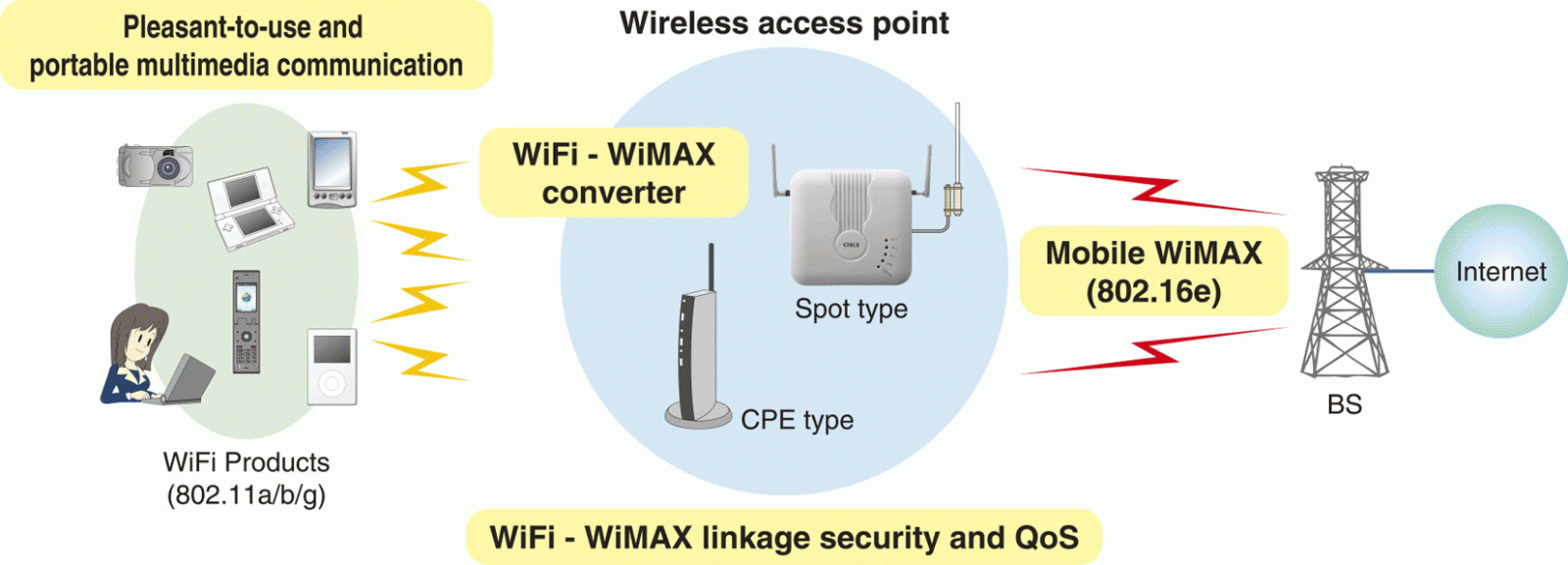
WiMAX WiMAX

WiMAX has a theoretical maximum bandwidth of 75Mbps. This bandwidth can be achieved using 64QAM 3/4 modulation. 64QAM can only be utilized under optimal transmission conditions. WiMAX supports the use of a wide range of modulation algorithms to enable the most bandwidth to be realized under all conditions.

WiMAX has a theoretical maximum range of 31 miles with a direct line of sight. Near-line-of-sight (NLOS) conditions will seriously limit the potential range.

In addition, some of the frequencies utilized by WiMAX are subject to interference from rainfade. The unlicensed WiMAX frequencies are subject to RF interference from competing technologies and competing WiMAX networks.

WiMAX Specifications

Fixed/Mobile Fixed
Circuit/Packet: Packet
Max Bandwidth 70 Mbps
Range 31 miles
Frequency 10-66GHz, 2-11Ghz
Host Network N/A
Definer IEEE (Institute of Electrical and Electronic Engineers)
URL http://grouper.ieee.org/groups/802/16/

WiMAX Security

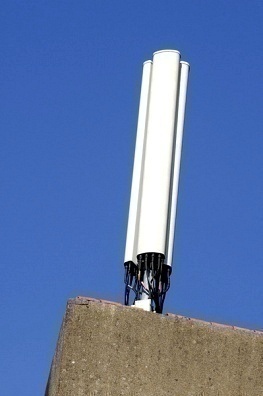
wimax antenna base WiMAX
WiMAX achieved a jump start on security by adopting the mature DOCSIS BPI+ security protocol.

WiMAX authentication relies on PKM-EAP (Extensible Authentication Protocol) and TLS (Transport Layer Security).

WiMAX encryption uses CCMP (Counter Mode with Cipher Block Chaining Message Authentication Code Protocol), which uses the AES algorithm for data encryption.

WiMAX encryption also supports the earlier Triple DES standard.
VN:F [1.9.17_1161]
Rating: 7.0/10 (1 vote cast)
WiMAX, 7.0 out of 10 based on 1 rating
Follow Daniel Memetic on

Leave a Reply

Related Posts

  • LMDS (Local Multipoint Distribution Service)

    LMDS (Local Multipoint Distribution Service) is a broadband wireless point-to-multipoint specification utilizing microwave communications. LMDS operates on FCC licensed frequencies. The FCC divided the United States into 493 BTA's (Basic Trading Areas) and auctioned the rights to transmit on the LMDS bands in each of those areas to LMDS service providers. Each BTA is licensed [...]...


  • MMDS (Multichannel Multipoint Distribution Service)

    MMDS (Multichannel Multipoint Distribution Service) is a broadband wireless point-to-multipoint specification utilizing UHF (Ultra High Frequency) communications. MMDS operates on FCC licensed frequencies. The FCC divided the United States into BTA's (Basic Trading Areas) and auctioned the rights to transmit on the MMDS bands in each of those areas to MMDS service providers. The MMDS [...]...


  • 802.11i

    802.11i is a draft IEEE standard for 802.11 wireless network security. 802.11i defines several new standards, and also relies heavily on many existing standards. New Protocols in 802.11i 802.11i introduced the RSN (Robust Secure Network) protocol for establishing secure communications. 802.11i also introduced the WRAP (Wireless Robust Authentication Protocol) and CCMP encryption protocols. WRAP and [...]...


  • Wireless Networks and their Types

    Wireless networks are those computer networks that use electromagnetic waves instead of wires in order to carry signals over the various parts of the network. Wireless networks which run over other wireless networks often utilize the lower layer networks to provide security and encryption. Stand-alone wireless networks either provide their own security and encryption features [...]...


  • Business Band

    Business band stands for a series of frequencies in the UHF and VHF two-way radio bands, which are exclusively reserved for businesses to communicate within limited ranges. Of course, not just anyone can use this bandwidth. Anyone that wants to use the business band must first receive a license from the Federal Communications Commission, also [...]...