

Cordless phones, also known as cordless telephones or portable telephones, are a smarter replacement for the regular telephones. Cordless phones make use of wireless radio waves to connect to their base station equipments, unlike the wired cord of a regular telephone.
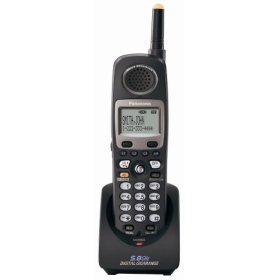
Because cordless handsets use radio linking with their base stations, they operate within specific ranges of frequencies. The range of connectivity is quite limited – maybe inside the house or to few adjacent floors. The base station requires power supply to charge the internally fitted rechargeable battery.
The term frequency refers to the rate at which an electromagnetic wave oscillates. Therefore, most cordless phone models are allotted specific range of frequencies within which they operate. A cordless handset and and a base station communicates with each other using this frequency.
Here are the frequencies for the first generation 46/49MHz cordless phones.
| Channel | Handset Frequency | Base Frequency |
| 1 | 49.670 | 46.610 |
| 2 | 49.845 | 46.630 |
| 3 | 49.860 | 46.670 |
| 4 | 49.770 | 46.710 |
| 5 | 49.875 | 46.730 |
| 6 | 49.830 | 46.770 |
| 7 | 49.890 | 46.830 |
| 8 | 49.930 | 46.870 |
| 9 | 49.990 | 46.930 |
| 10 | 49.970 | 46.970 |
900MHz Cordless Phone Frequencies
Second generation 900MHz cordless phones have been allocated the frequencies between 902 and 928MHz, with channel spacing between 30-100KHz.
The following are some examples of the frequencies that example cordless phones use:
Panasonic KX-T9000 (60 Channels) Base Frequency: 902.100 – 903.870 Handset Frequency: 926.100 – 927.870
| Channel | Base Frequency | Handset Frequency | Channel | Base Frequency | Handset Frequency |
| 01 | 902.100 | 926.100 | 31 | 903.000 | 927.000 |
| 02 | 902.130 | 926.130 | 32 | 903.030 | 927.030 |
| 03 | 902.160 | 926.160 | 33 | 903.060 | 927.060 |
| 04 | 902.190 | 926.190 | 34 | 903.090 | 927.090 |
| 05 | 902.220 | 926.220 | 35 | 903.120 | 927.120 |
| 06 | 902.250 | 926.250 | 36 | 903.150 | 927.150 |
| 07 | 902.280 | 926.280 | 37 | 903.180 | 927.180 |
| 08 | 902.310 | 926.310 | 38 | 903.210 | 927.210 |
| 09 | 902.340 | 926.340 | 39 | 903.240 | 927.240 |
| 10 | 902.370 | 926.370 | 40 | 903.270 | 927.270 |
| 11 | 902.400 | 926.400 | 41 | 903.300 | 927.300 |
| 12 | 902.430 | 926.430 | 42 | 903.330 | 927.330 |
| 13 | 902.460 | 926.460 | 43 | 903.360 | 927.360 |
| 14 | 902.490 | 926.490 | 44 | 903.390 | 927.390 |
| 15 | 902.520 | 926.520 | 45 | 903.420 | 927.420 |
| 16 | 902.550 | 926.550 | 46 | 903.450 | 927.450 |
| 17 | 902.580 | 926.580 | 47 | 903.480 | 927.480 |
| 18 | 902.610 | 926.610 | 48 | 903.510 | 927.510 |
| 19 | 902.640 | 926.640 | 49 | 903.540 | 927.540 |
| 20 | 902.670 | 926.670 | 50 | 903.570 | 927.570 |
| 21 | 902.700 | 926.700 | 51 | 903.600 | 927.600 |
| 22 | 902.730 | 926.730 | 52 | 903.630 | 927.630 |
| 23 | 902.760 | 926.760 | 53 | 903.660 | 927.660 |
| 24 | 902.790 | 926.790 | 54 | 903.690 | 927.690 |
| 25 | 902.820 | 926.820 | 55 | 903.720 | 927.720 |
| 26 | 902.850 | 926.850 | 56 | 903.750 | 927.750 |
| 27 | 902.880 | 926.880 | 57 | 903.780 | 927.780 |
| 28 | 902.910 | 926.910 | 58 | 903.810 | 927.810 |
| 29 | 902.940 | 926.940 | 59 | 903.840 | 927.840 |
| 30 | 902.970 | 926.970 | 60 | 903.870 | 927.870 |
GE model 26938GE1-C
| Channel | Base Frequency | Handset Frequency | Channel | Base Frequency | Handset Frequency |
| 01 | 923.7 | 925.9 | 21 | 924.7 | 926.9 |
| 02 | 923.8 | 925.95 | 22 | 924.75 | 926.95 |
| 03 | 923.8 | 926.0 | 23 | 924.8 | 927.0 |
| 04 | 923.85 | 926.05 | 24 | 924.85 | 927.05 |
| 05 | 923.9 | 926.1 | 25 | 924.9 | 927.1 |
| 06 | 923.95 | 926.15 | 26 | 924.95 | 927.15 |
| 07 | 924.0 | 926.2 | 27 | 925.0 | 927.2 |
| 08 | 924.05 | 926.25 | 28 | 925.05 | 927.25 |
| 09 | 924.1 | 926.4 | 29 | 925.1 | 927.3 |
| 10 | 924.15 | 926.35 | 30 | 925.15 | 927.35 |
| 11 | 924.2 | 926.4 | 31 | 925.2 | 927.4 |
| 12 | 924.25 | 926.45 | 32 | 925.25 | 927.45 |
| 13 | 924.3 | 926.5 | 33 | 925.3 | 927.5 |
| 14 | 924.35 | 926.55 | 34 | 925.35 | 927.55 |
| 15 | 924.4 | 926.6 | 35 | 925.4 | 927.6 |
| 16 | 924.45 | 926.65 | 36 | 925.45 | 927.65 |
| 17 | 924.5 | 926.7 | 37 | 925.5 | 927.7 |
| 18 | 924.55 | 926.75 | 38 | 925.55 | 927.75 |
| 19 | 924.6 | 926.8 | 39 | 925.6 | 927.8 |
| 20 | 924.65 | 926.85 | 40 | 925.65 | 927.85 |
V-Tech Tropez DX900 (20 Channels)
Base Frequency: 905.6 – 907.5 (100Khz spacing), Handset Frequency: 925.5 – 927.4
| Channel | Base Frequency | Handset Frequency | Channel | Base Frequency | Handset Frequency |
| 01 | 905.600 | 925.500 | 11 | 906.600 | 926.500 |
| 02 | 905.700 | 925.600 | 12 | 906.700 | 926.600 |
| 03 | 905.800 | 925.700 | 13 | 906.800 | 926.700 |
| 04 | 905.900 | 925.800 | 14 | 906.900 | 926.800 |
| 05 | 906.000 | 925.900 | 15 | 907.000 | 926.900 |
| 06 | 906.100 | 926.000 | 16 | 907.100 | 927.000 |
| 07 | 906.200 | 926.100 | 17 | 907.200 | 927.100 |
| 08 | 906.300 | 926.200 | 18 | 907.300 | 927.200 |
| 09 | 906.400 | 926.300 | 19 | 907.400 | 927.300 |
| 10 | 906.500 | 926.400 | 20 | 907.500 | 927.400 |
Other 900MHz cordless phones:
| AT&T #9120 | 902.0 – 905.0 & 925.0 – 928.0 MHz |
| Otron Corp. #CP-1000 | 902.1 – 903.9 & 926.1 – 927.9 MHz |
| Samsung #SP-R912 | 903.0 & 927.0 MHz |
2.4GHz Cordless Phone Frequencies
Third generation 2.4GHz cordless phones have been allocated the frequencies between 2.4Ghz and 2.4835Ghz, with a channel spacing of 5MHz.
The 2.4GHz cordless phone frequencies are shared with 802.11b and 802.11g wireless networks.
5.8GHz Cordless Phone Frequencies
Fourth generation 5.8GHz cordless phones have been allocated the frequencies between 5.725Ghz and 5.850Ghz.
It is important to note that some 5.8GHz cordless phones use the 5.8Ghz frequencies only for base-to-handset transmissions, while still using the 2.4Ghz frequencies for handset to base transmissions.
This split frequency technique saves battery life on the cordless phone handset because it requires more power to transmit at the higher 5.8GHz frequency than at the lower 2.4Ghz frequency.
The 5.8GHz cordless phone frequencies are shared with 802.11a wireless networks.
Fred
to scan a cordless phone do you need t program the base frequency into the scanner as well as the handset frequency or just the handset frequency?
WillSpencer
You’ll want to monitor both frequencies if you want to hear both sides of the conversation.
Don
Danny,
If you go to the FCC website and look for FCC ID number identification, it will give you the specs on the Panasonic device. I believe you will find that: 1. your scanner won’t go that high, 2. the device is not analog but digital modulation which scanners won’t demodulate, and 3. the device also frequency-hops meaning your scanner couldn’t “lock” on it and stay with it anyway. Sorry, but that is the current state of the art these days.
John Casey
I need to find out the frequencys of the base and handset for a Panasonic cordless telephone model KX-TC 1484B.
Could you please E Mail the list if you have it.
Thank you
John